Youjoung (Yuna) Kim, PhD
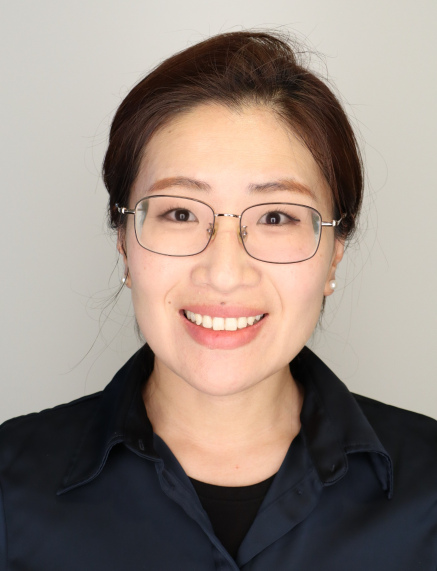
Welcome! I am a Postdoctoral Research Associate at the Human Rights Initiative in the Department of Anthropology at Princeton University. My research draws upon legal anthropology, gender and kinship studies, and East Asian history to study how the state's kinship surveillance technology is deployed within reconciliation apparatuses for the reparation of state violence, producing gendered forms of recognition. My current book project, Claiming Kin, explores how South Korea's guilt-by-association system (yŏnjwaje) continues to structure who counts as grievable through a patrilineal framework of descent. Focusing on the Jeju 4·3 (Sasam) Special Act—the legal pathway to redress the killing of over 30,000 people on accusations of communist sympathies in Jeju, South Korea—my work draws on fieldwork among Jeju Islanders and the Jeju diaspora in Osaka to show how this gendered technology of redress determines who is entitled to recognition as a bereaved family. My research has been supported by the National Science Foundation, the Wenner-Gren Foundation, the Society for Psychological Anthropology, and various programs at Johns Hopkins University. In recognition of this work, I received the David M. Schneider Award from the American Anthropological Association and was selected as a finalist for the Student Paper Prize from the Association for Political and Legal Anthropology.
I completed my PhD in Anthropology at Johns Hopkins University, MA in Social Anthropology of Development (Distinction) at SOAS, University of London, and BA in Development Studies and Cultural Changes at Macquarie University. Before coming to Princeton, I was affiliated with Harvard University, the National Museum of Ethnology, the Jeju 4·3 Peace Foundation, the Jeju 4·3 Research Institute, and the Korean National Commission for UNESCO.
Separately from my book project, I am currently developing three side projects: the politics of naming the violence of Jeju 4·3, whose referent remains unsettled; indigenous, relational temporality, tracing the circulation of people and basalt stones between Jeju Island and Osaka for the enactment of the Jeju 4·3 memorial monument; and an alternative guide to Jeju that foregrounds the island's myths and militarized histories through Seongsan Ilchulbong, a well-known tourist site on Jeju's eastern coast.